
 点击放大
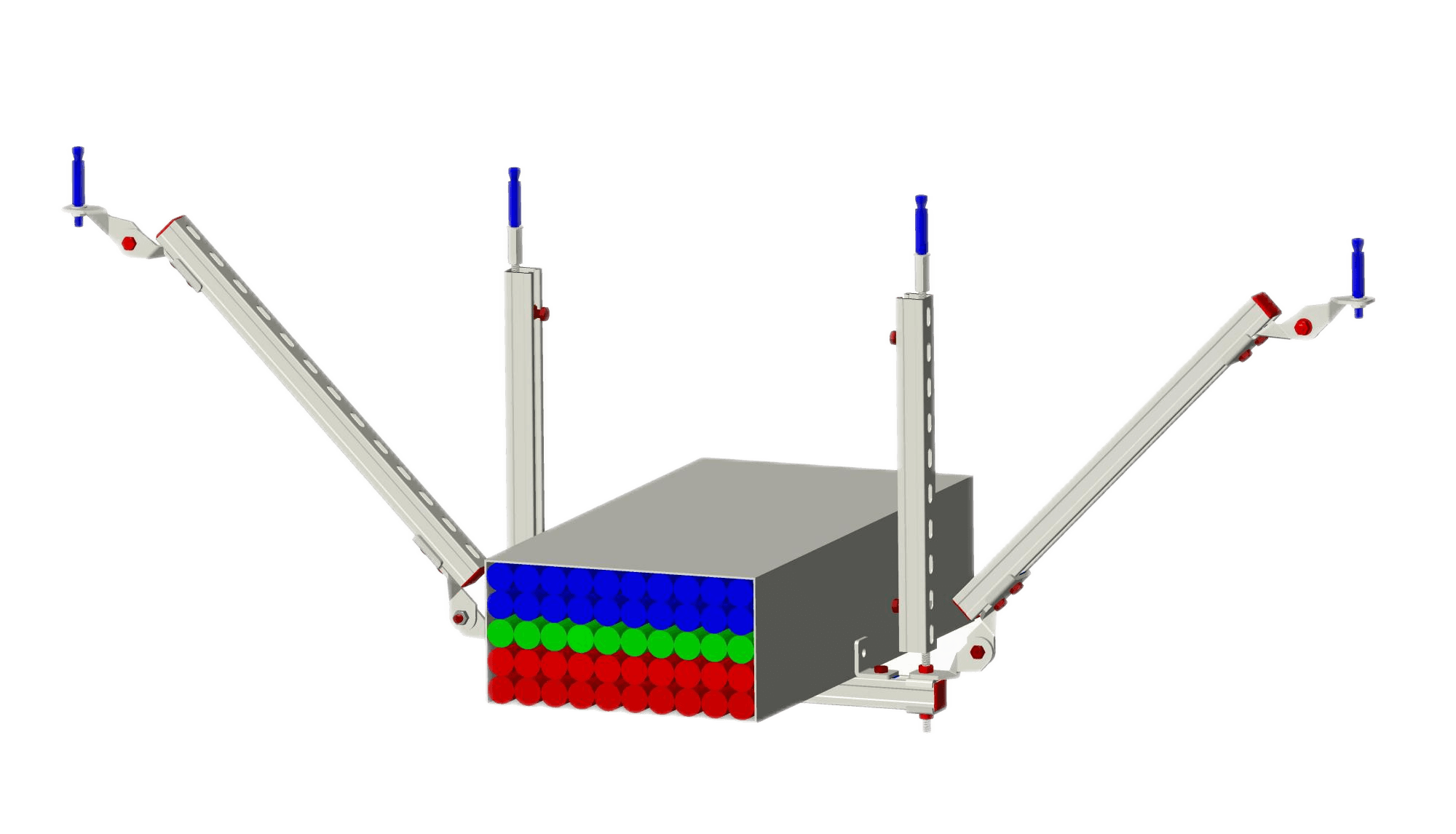
点击放大Cable Tray Lateral Seismic Brace (T)
Seismic Bracing is a seismic support facility that is firmly connected to the building structure, with seismic force as the primary load. Its core function is to restrain the horizontal displacement of mechanical and electrical pipelines and equipment during an earthquake, preventing pipe detachment, collision, and rupture, thereby ensuring the functional continuity of lifeline systems. Definition (GB/T 37267-2018): A seismic support facility firmly connected to the building structure, consisting of anchoring components, reinforced hanger rods, seismic connection components, and seismic diagonal braces. Product Overview: The cable tray lateral seismic brace is a lateral seismic support specifically designed for electrical cable facilities such as cable trays, cable ladder racks, cable troughs, and busways. The diagonal brace is arranged parallel to the cross-section of the tray to resist lateral horizontal seismic forces. Structural Composition: Comprised of anchoring components, reinforced hanger rods, seismic connection components, and seismic diagonal braces. The inner edges of the U-shaped channel steel must feature serrations with a tooth depth of no less than 0.9mm, and all accessory installations are achieved through mechanical interlocking. The surface of the bracket channel steel is treated with hot-dip galvanizing (zinc layer thickness no less than 60μm) to meet durability requirements. Spacing: ≤12m (lateral spacing) Core Function: To limit the lateral displacement of cable trays during earthquakes, control tray vibration, and transfer loads to the load-bearing structure. This prevents tray detachment and cable rupture, ensuring the normal operation of power supply and fire protection systems. Applicable Areas: New construction, renovation, and expansion projects in regions with seismic fortification intensity of 6 to 9 degrees. Application Scenarios: Electrical conduits with an inner diameter ≥60mm; cable ladder racks, cable troughs, and busways with a gravity load ≥150N/m; regions with seismic fortification intensity of 6 degrees or above; widely used in major national construction projects such as nuclear power plants, power plant renovations, high-speed railway construction, and airport expansions. For tray bottom widths ≤600mm, single-sided bracing is used; for tray bottom widths ≥800mm, double-sided bracing is used; longitudinal bracing is double-supported in all cases.
本产品依据 GB 50981-2014《建筑机电工程抗震设计规范》设计制造,与建筑结构牢固连接,以地震力为主要荷载,通过锚固件、加固吊杆、抗震连接构件及抗震斜撑组成完整的抗震支撑体系。所有构件采用成品构件,现场免焊接、快速装配,有效控制机电管线在地震中的位移与振动,将地震荷载传递至建筑承重结构,保障生命线系统的功能性延续。用于电缆桥架、电缆梯架、母线槽的侧向抗震支撑,防止桥架震中脱落、电缆断裂,保障电力与消防系统正常运行。
适用于抗震设防烈度 6 度及以上地区各类民用与公共建筑、工业建筑的机电工程,包括给排水、消防、暖通空调、电气等专业管线系统。 典型应用:医院、学校、大型商业综合体、机场、高铁站房、数据中心、工业厂房及地下综合管廊等对震后功能延续要求高的建筑机电工程。
- GB 50981-2014建筑机电工程抗震设计规范
- CECS 420:2015抗震支吊架安装及验收规程
- GB/T 37267-2018建筑抗震支吊架通用技术条件
- JGJ 145-2013混凝土结构后锚固技术规程